

Northern Ireland Tyre Recycling Equipment Manufacturer Expands Worldwide Reach
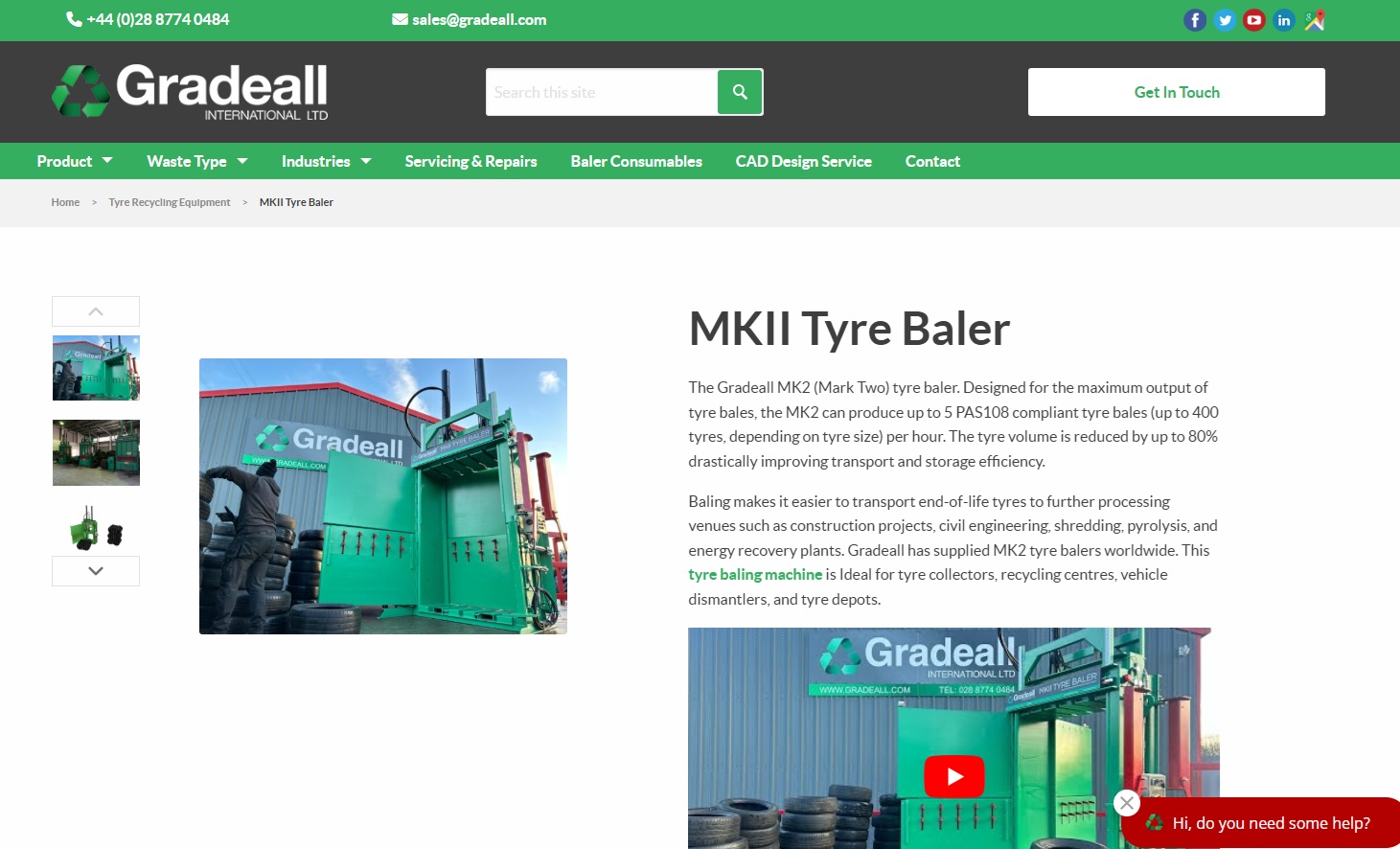
MK2 can produce up to 5 PAS108 compliant tyre bales
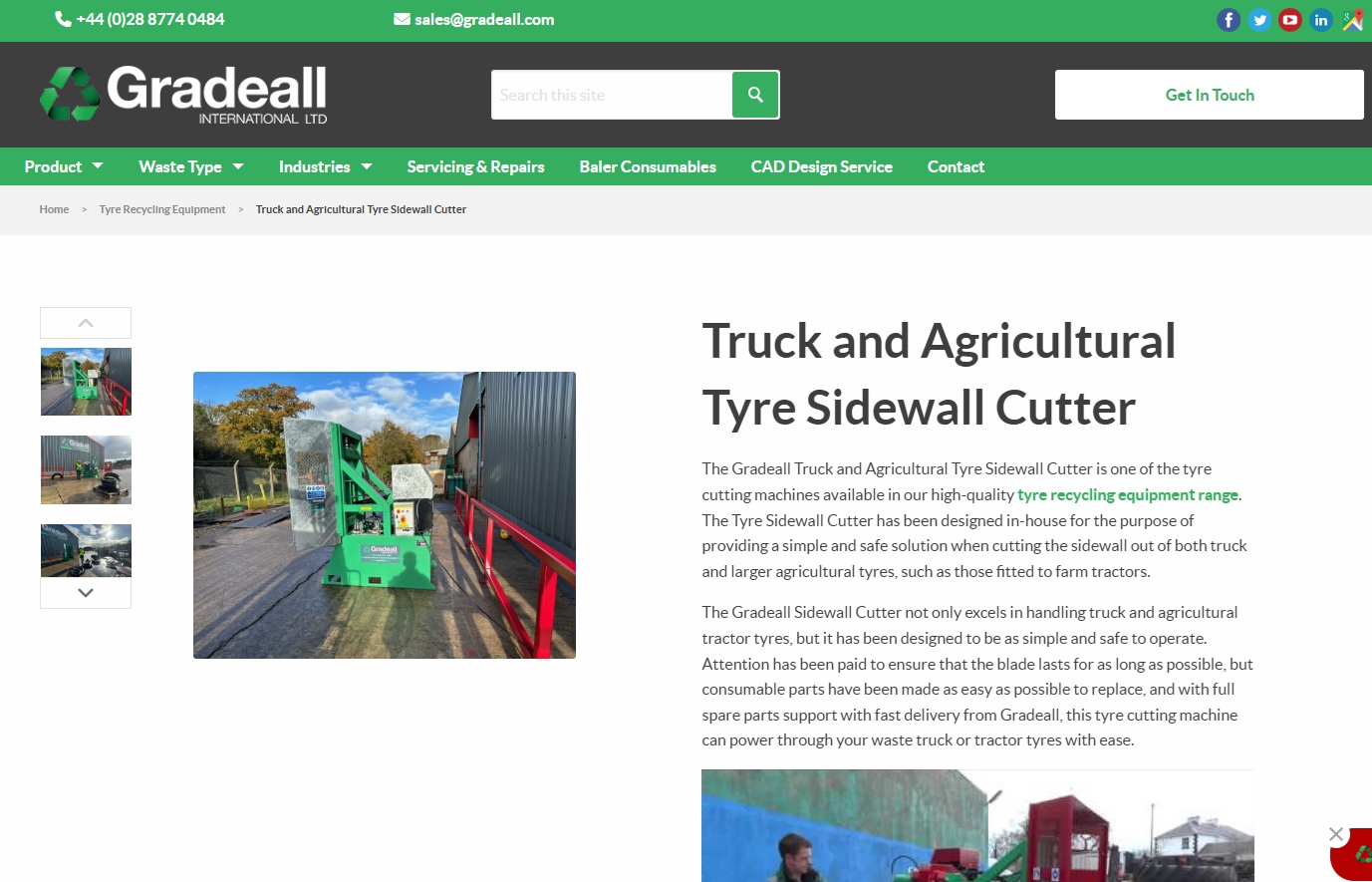
Gradeall Truck and Agricultural Tyre Sidewall Cutter is one of the tyre cutting machines available in our high-quality tyre recycling equipment range
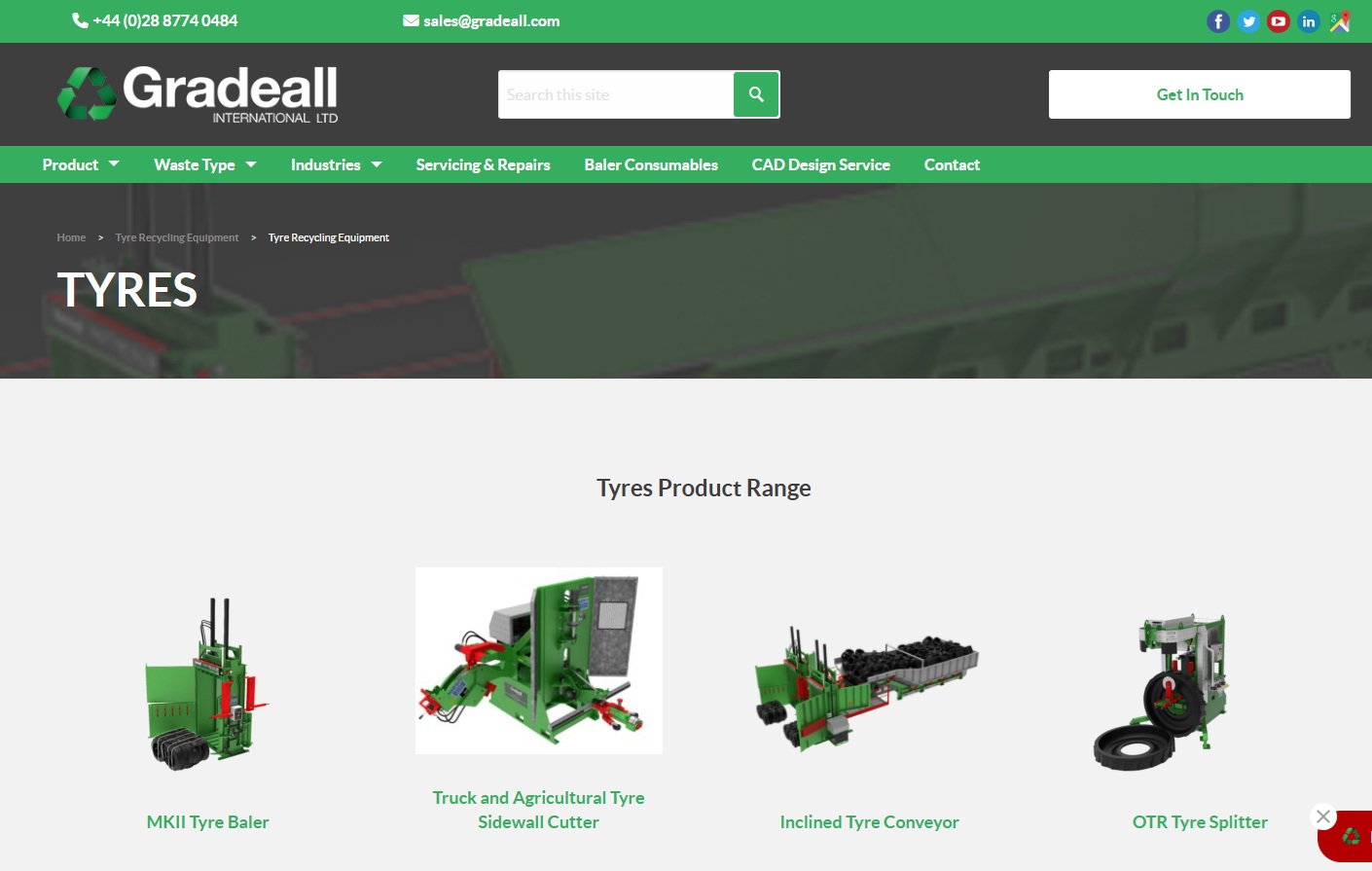
tyre recycling equipment - Gradeall International
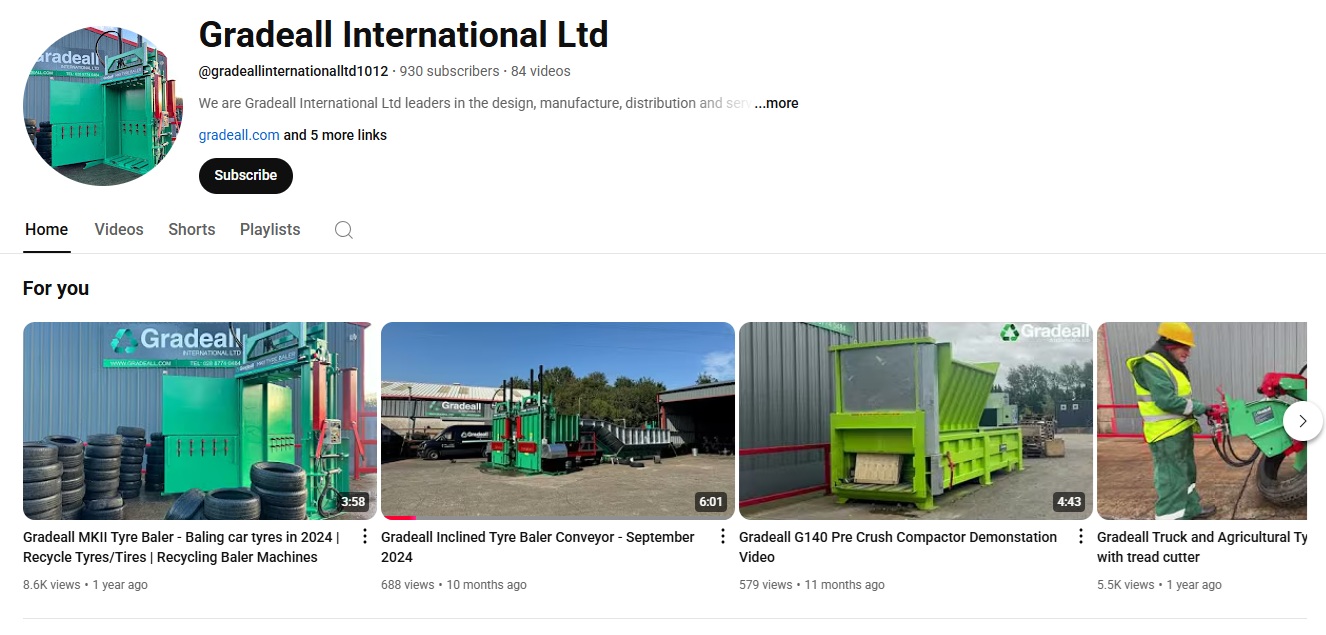
Gradeall International Ltd - Industrial Recycling Machinery
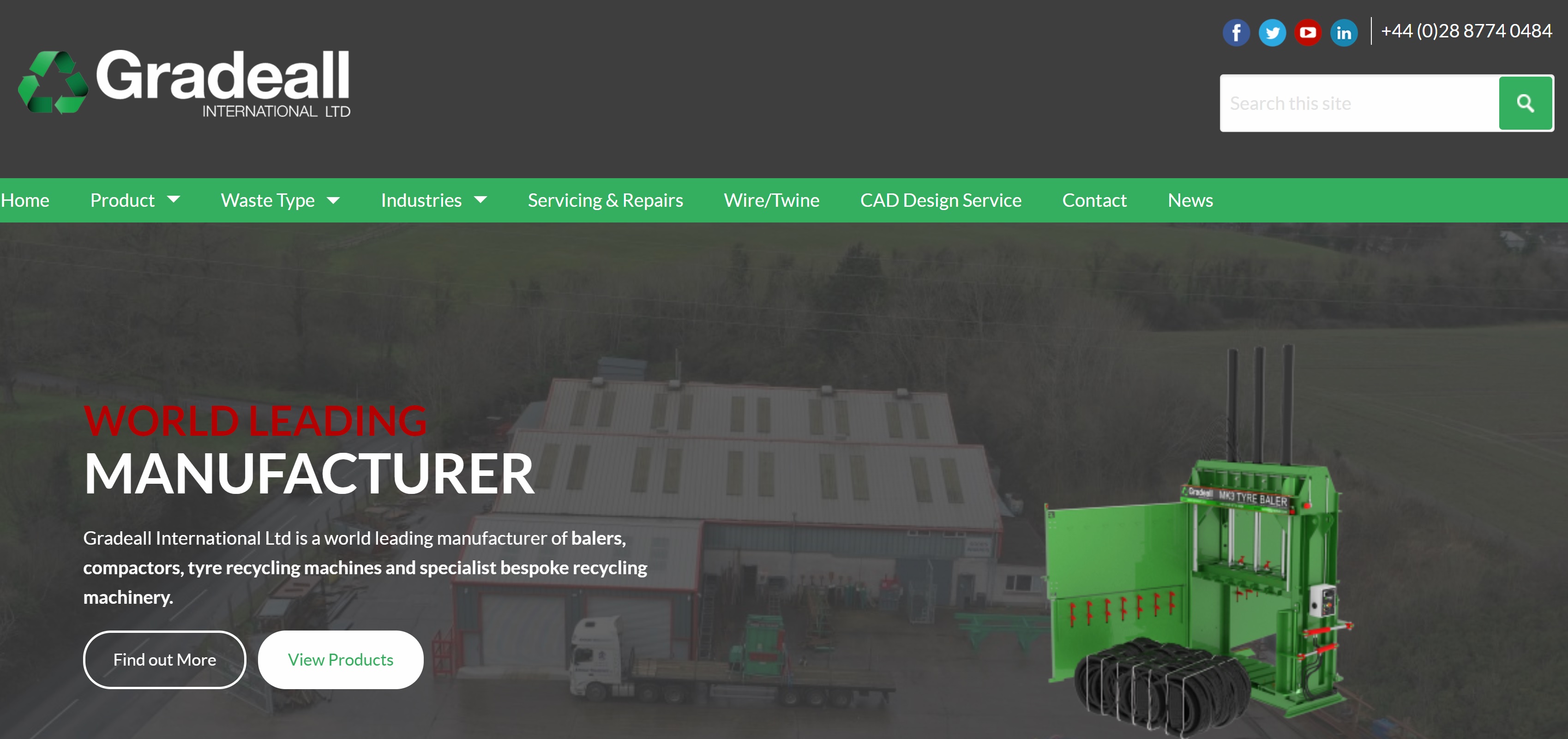
Gradeall Industrial Recycling Machines
Gradeall International's PAS 108-compliant tyre balers help nations address environmental emergency as UK Parliament debates tyre export reforms
Gradeall International Limited, headquartered in Dungannon, County Tyrone, has established itself as a leading manufacturer of tyre recycling equipment, exporting machinery to customers worldwide across multiple continents. The company's flagship MKII Tyre Baler—capable of producing PAS 108-compliant bales that reduce tyre volume by up to 80%—has become trusted equipment for recycling operations from Iceland to Australia, Panama to South Africa.
The timing of Gradeall's international expansion coincides with increasing regulatory pressure across multiple jurisdictions. In April 2025, the UK Parliament held a significant debate on tyre recycling, with MPs highlighting that approximately 350,000 tonnes of end-of-life tyres are currently exported annually from the UK to India, where processing often occurs in facilities with limited environmental controls. The debate referenced GPS tracking studies showing exported tyres frequently ending up in unregulated batch pyrolysis facilities.
"We've been manufacturing tyre recycling machinery for nearly 40 years, and the demand we're seeing now is unlike anything in our history," says a spokesperson for Gradeall International. "Governments worldwide are recognising that tyres cannot simply be exported to become someone else's problem. They need proper processing infrastructure, and that requires purpose-built equipment designed for the task."
The Scale of the Global Tyre Waste Challenge
The statistics surrounding global tyre waste paint a concerning picture. According to industry research, over 1 billion end-of-life tyres are disposed of worldwide yearly, with many ending up in landfills or being incinerated. The European Tyre and Rubber Manufacturers' Association reports that Europe alone contributes 3.5 million tonnes of end-of-life tyres annually, whilst the United States generates approximately 317 million waste tyres each year—equivalent to nine tyres discarded every second.
Regional variations in processing capabilities create significant environmental disparities. Whilst Europe achieves approximately 95% collection and treatment rates for end-of-life tyres, emerging economies often struggle with inadequate infrastructure. Analysis indicates that globally, two-thirds of the billions of end-of-life tyres remain untreated, ending up in illegal dumps or landfills where they attract rodents, create breeding grounds for disease-carrying mosquitoes, and emit harmful chemicals during slow decomposition.
The environmental consequences extend beyond simple waste accumulation. Tyre wear particles have been identified as one of the largest sources of microplastic pollution in ocean environments, whilst abandoned tyres create ideal conditions for disease transmission. A single discarded tyre can produce thousands of mosquito larvae during rainy seasons, creating endemic disease transmission risks in tropical and subtropical regions.
The risks associated with improper tyre disposal have driven increased regulatory attention worldwide. Many jurisdictions have now banned open burning of waste tyres entirely due to the toxic emissions produced, including carcinogenic compounds that contaminate both air and water supplies. Tyre fires at illegal dump sites can burn for months, releasing harmful pollutants across wide areas.
PAS 108 Compliance: The British Standard Gaining Global Recognition
Central to Gradeall's international success is its commitment to PAS 108 compliance—a Publicly Available Specification developed by the British Standards Institution in collaboration with the Waste & Resources Action Programme (WRAP). This standard provides specifications for producing compact tyre bales of consistent and verifiable quality, dimensions that have become increasingly important for construction and civil engineering applications worldwide.
The engineering properties specified in PAS 108 include reference bales measuring 1.33 metres in length, 1.55 metres in width, and 0.83 metres in depth, with a nominal mass density of 470 kg/m³. These standardised dimensions enable baled tyres to be used in construction applications including road foundations over soft ground, slope failure repairs, lightweight embankment fill, and drainage layers behind retaining walls.
Gradeall's MKII Tyre Baler produces between four and six PAS 108-compliant bales per hour, with each bale containing approximately 100 tyres depending on size. This processing capacity enables recycling operations to handle substantial volumes whilst maintaining the consistency required for construction applications. The tyre baler has been proven to reduce tyre waste volume by up to 85%, with completed bales weighing approximately 810 kg each.
The baling process transforms what would otherwise be bulky, difficult-to-handle waste into uniform, stackable units that dramatically improve transport efficiency. A single 40-foot container can accommodate between 40-44 completed truck tyre bales, bringing the weight of tyres loaded to between 23-24 tonnes per shipment.
UK Parliamentary Debate Highlights £250 Million Domestic Opportunity
The UK Parliamentary debate on tyre recycling in April 2025 highlighted growing political attention to waste tyre management and the economic opportunity presented by domestic processing. MPs referenced Australia's successful legislation requiring tyres to be shredded before export, backed by strict licensing and verification schemes, as a potential model for UK reform.
A study cited during the debate suggested that if tyres were processed domestically, the value to the UK economy could exceed £250 million annually, compared to the £13 million generated from current export practices. This economic argument, combined with environmental concerns about overseas processing standards, has prompted calls for tighter export controls and investment in domestic recycling infrastructure.
Tessa Munt MP opened the debate by emphasising the need to rethink waste as a resource within the circular economy framework. She highlighted concerns over illegal and hazardous processing of exported tyres in batch pyrolysis plants that produce high-sulphur heavy fuel oils and low-grade carbon black, often releasing harmful emissions without adequate filtration systems.
Sarah Dyke MP underscored the potential of local businesses specialising in tyre recycling, stressing that boosting domestic processing capacity could stimulate economic growth, create employment, and prevent environmental harm abroad. The debate also referenced Northern Ireland's own historical challenges with tyre waste, noting that councils have implemented distinct policies to address the issue.
The Tyre Recovery Association has subsequently called on the Government to further tighten export controls, end T8 exemptions, and support the development of the circular economy through domestic tyre processing. Industry observers suggest 2026 could represent a crossroads for UK tyre recycling policy.
Equipment Range Designed for Global Market Needs
Gradeall's product range has been developed to address the diverse needs of recycling operations across different markets and regulatory environments. All equipment is manufactured at the company's 35,000 square foot facility in Northern Ireland, with remote monitoring capabilities enabling engineers to conduct health checks on machinery regardless of its global location.
The MKII Tyre Baler represents the company's flagship solution for high-volume car tyre processing. Producing up to 6 PAS 108-compliant bales per hour with 80% volume reduction, this machine suits tyre collectors, recycling centres, vehicle dismantlers, and tyre depots. The baler features a custom-designed power unit that reduces power consumption and noise levels whilst providing consistent performance.
The MK3 Tyre Baler offers enhanced capacity for industrial-scale operations, producing bales 50% larger than standard PAS 108 specifications for facilities requiring maximum throughput. This machine targets large-scale recycling operations and multi-site waste management companies.
The Truck Tyre Baler specifically handles larger commercial vehicle tyres, producing bales containing up to 12 truck tyres weighing between 600-700 kg. Operated by two people, this machine reduces truck tyre volumes to between 15-20% of original size, cutting transport requirements by up to 70%.
The Inclined Tyre Baler Conveyor integrates with MKII Balers to process up to 850 tyres per hour whilst reducing operator strain through ergonomic loading at chest height. This addition addresses workplace health and safety concerns whilst significantly increasing throughput.
The Truck Tyre Sidewall Cutter handles large truck, lorry, and agricultural tyres by separating sidewalls from tread sections, making them easier to bale and transport.
The Car Tyre Sidewall Cutter performs similar functions for smaller passenger vehicle tyres.The OTR Tyre Cutting Equipment range addresses the most challenging large tyres from mining and agricultural applications.
The OTR Tyre Splitter cuts tyres in half along the tread section, whilst the OTR Tyre Sidewall Cutter isolates the bead section that can prove problematic for shredding equipment. These machines reduce massive off-the-road tyres to manageable segments for further processing.
The Tyre Rim Separator efficiently separates steel rims from rubber tyres, maximising material recovery value from both components. This separation supports the recovery of valuable steel for construction and manufacturing applications.
Economic Benefits Driving Equipment Investment
Investment in professional tyre recycling equipment delivers measurable economic and environmental returns that support business cases across diverse markets. Transportation costs are typically reduced by 60-70% through efficient baling, which compresses tyres to approximately 15-20% of their original volume. This volume reduction translates directly to lower fuel consumption, reduced emissions, and decreased handling requirements.
Material recovery from processed tyres generates multiple revenue streams. Products made from recycled tyres include rubber crumb for playground surfaces and athletic tracks, rubberised asphalt for road construction, moulded rubber products, and tyre-derived fuel for energy recovery. Steel wire recovered from tyres supplies construction and manufacturing sectors, whilst textile fibres find industrial applications.The tyre recycling process supports circular economy objectives by transforming waste into valuable resources. Rather than occupying landfill space or creating environmental hazards, end-of-life tyres become feedstock for new products and applications. This approach aligns with EU Circular Economy Action Plan objectives and UK Government commitments to sustainable waste management.
Supporting Global Sustainability Initiatives
Effective tyre recycling equipment contributes to several global sustainability programmes. The United Nations Sustainable Development Goals directly addressed by efficient tyre processing include Goal 11 (Sustainable Cities and Communities), Goal 12 (Responsible Consumption and Production), Goal 13 (Climate Action), and Goal 9 (Industry, Innovation, and Infrastructure).The European Commission's Clean Industrial Deal, published in 2025, prioritises circularity and access to materials to reduce dependencies and support industrial resilience. A Circular Economy Act expected in 2026 aims to boost demand for recycled materials and strengthen the EU internal single market for waste and circular materials.
EURIC and ETRMA—representing European recycling industries and tyre manufacturers respectively—have called for the development of EU-wide End-of-Waste criteria for rubber from end-of-life tyres, arguing that harmonised standards would strengthen the European recycling sector and enable recovered materials to re-enter manufacturing supply chains more efficiently.
Electric Vehicle Transition Expected to Increase Tyre Waste
Looking ahead, the transition to electric vehicles presents both challenges and opportunities for the tyre recycling sector. Electric vehicles are typically heavier than their combustion engine equivalents and deliver higher torque, factors that accelerate tyre wear and shorten tyre lifespans. Industry analysis suggests EV adoption will increase the volume of end-of-life tyres requiring processing.DNV's Energy Transition Outlook projects that vehicle ownership will stabilise at approximately 3.4 billion vehicles by the mid-2040s, with the increase primarily driven by growth in car ownership across Asia Pacific regions. The increase in market share of passenger EVs from 8% today to 96% by 2050 will create additional pressure on tyre processing infrastructure.This anticipated growth in tyre waste volumes reinforces the importance of investment in efficient processing equipment. Facilities established now with adequate capacity will be well-positioned to handle increased volumes as vehicle fleets transition to electric powertrains.
Manufacturing Heritage and Customer Support
Gradeall International traces its origins to the mid-1980s when it began as a manufacturer of coal grading equipment servicing Northern Ireland and the UK. In the early 1990s, recognising the emerging importance of recycling, the company repositioned into the waste management and recycling sector, expanding into tyre recycling equipment manufacturing.
Today, the company designs, manufactures, and installs waste management and recycling equipment from its facility in Dungannon. The sales team brings combined experience exceeding 100 years in the recycling industry, providing customers with guidance on equipment selection and implementation.After-sales support includes a network of engineers built up over nearly four decades in the waste recycling industry. Most machines can be logged onto remotely for health checks regardless of location, enabling engineers to diagnose issues and provide guidance without site visits. Service and preventative planned maintenance contracts provide ongoing support throughout equipment lifecycles.
FREQUENTLY ASKED QUESTIONS
What is PAS 108 and why does it matter for tyre recycling?PAS 108 is a Publicly Available Specification developed by the British Standards Institution in collaboration with WRAP. It provides specifications for producing compact tyre bales of consistent and verifiable quality for use in construction applications. Equipment that produces PAS 108-compliant bales ensures materials meet standardised dimensions and engineering properties required for road foundations, slope repairs, drainage systems, and other civil engineering applications.
How many tyres are discarded globally each year?Approximately 1.5 billion end-of-life tyres are generated worldwide annually, accounting for roughly 2% of total global waste production. The United States alone generates approximately 317 million waste tyres each year, whilst Europe contributes around 3.5 million tonnes annually. Estimates suggest 5 billion waste tyres could accumulate in landfills and stockpiles globally by 2030.
What happens to tyres that are not properly recycled?Improperly disposed tyres create multiple environmental and public health hazards. They become breeding grounds for disease-carrying mosquitoes, attract rodents, emit harmful chemicals during slow decomposition, and pose significant fire risks. Tyre fires can burn for months, releasing carcinogenic and mutagenic toxins that contaminate air and water. Tyre particles also contribute significantly to microplastic pollution in ocean environments.
How does tyre baling reduce environmental impact?Efficient baling reduces tyre volume by up to 80%, decreasing transportation requirements by up to 70%. This directly reduces fuel consumption and emissions associated with moving waste tyres to processing facilities. Baled tyres can also be used in construction applications, replacing virgin aggregate materials and diverting waste from landfill whilst creating useful products.
What is the economic potential of domestic tyre recycling in the UK?A study cited in UK Parliamentary debate suggested that if tyres were processed domestically, the value to the UK economy could exceed £250 million annually, compared to approximately £13 million generated from current export practices. Domestic processing would also create employment and reduce environmental risks associated with overseas processing in facilities with lower standards.
How will electric vehicles affect tyre waste volumes?Electric vehicles are typically heavier than combustion engine vehicles and deliver higher torque, both factors that accelerate tyre wear. Industry analysis suggests the transition to EVs will shorten tyre lifespans and increase the volume of end-of-life tyres requiring processing. With EV market share projected to reach 96% by 2050, tyre recycling infrastructure investment now will position facilities to handle anticipated volume increases.
What types of tyres can Gradeall equipment process?Gradeall manufactures equipment for processing all tyre types, from standard car tyres through to large truck, agricultural, and off-the-road tyres used in mining operations. Specialised equipment including sidewall cutters, OTR splitters, and tyre shears enables processing of the largest tyres that standard equipment cannot handle effectively.
Where is Gradeall equipment manufactured?All Gradeall equipment is designed and manufactured at the company's 35,000 square foot facility in Dungannon, County Tyrone, Northern Ireland. The company has been manufacturing recycling equipment since the early 1990s and provides worldwide delivery and support services.
Conor Murphy
Gradeall International
email us here
Visit us on social media:
LinkedIn
Facebook
YouTube
X
Other
Gradeall Recylcing Machinery Review
Legal Disclaimer:
EIN Presswire provides this news content "as is" without warranty of any kind. We do not accept any responsibility or liability for the accuracy, content, images, videos, licenses, completeness, legality, or reliability of the information contained in this article. If you have any complaints or copyright issues related to this article, kindly contact the author above.
